
Hello everyone! Are you working hard on your Japanese studies?
The Japanese you study in textbooks and classes is beautiful and proper. However, the language Japanese people use when they talk with friends or on the internet can be a little different from what you find in books.
Today, I’ll introduce some of that “youth slang,” or 若者言葉 (wakamonokotoba), that you won’t find in textbooks but that Japanese people use frequently.
Please be aware that these words are used in casual conversation and should not be used in a business setting or when speaking to someone of a higher status, or 目上 (meue).
Try using them little by little with your Japanese friends on social media. It might make your conversations more fun. Lol.
What is Youth Slang?
Youth slang is a type of “new word” (新語, shingo) or “流行語” (ryūkōgo, popular word).
New words are born because young people want to use “their own special words.” When a piece of youth slang becomes popular and everyone starts using it, young people stop using it and start creating new words again!
While some youth slang, like やばい (yabai) and めっちゃ (meccha), are used for a long time, many words disappear. It’s almost like a series of 流行 (ryūkō, trends) that are born and then fade away.
Part 1: Prefixes that Strengthen Words
There are prefixes that are added to the beginning of a word to add to or change its meaning, such as 不 (fu) in 不可能 (fukanō, impossible) or 無 (mu) in 無料 (muryō, free).
There are youth slang versions of these prefixes too. For a while, 超 (chō) was used a lot. Around 2025, you’ll often hear 爆 (baku) and 激 (geki).
Note: よく耳にします (yoku mimi ni shimasu) means “you often hear.”
Baku :爆:ばく
This word comes from 爆発 (bakuhatsu, explosion) and is used to mean “very” or “incredibly.” 爆 (Baku) is also very active on social media.
- How to use:
- 爆笑 (bakushō): To laugh with a very loud voice, or 声 (koe).
- 爆買 (bakugai): To buy a lot of things at once, or 一度 (ichido).
- 爆バズ (bakubazu): A post that has broken through hundreds of thousands or millions of views. It’s a level above バズる (bazuru, to go viral). It can also be shortened to 爆バ (bakuba).
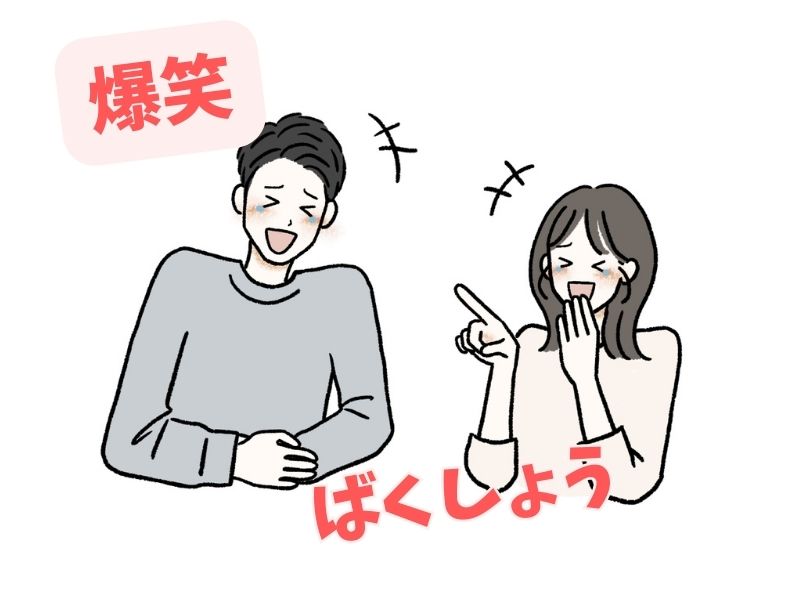
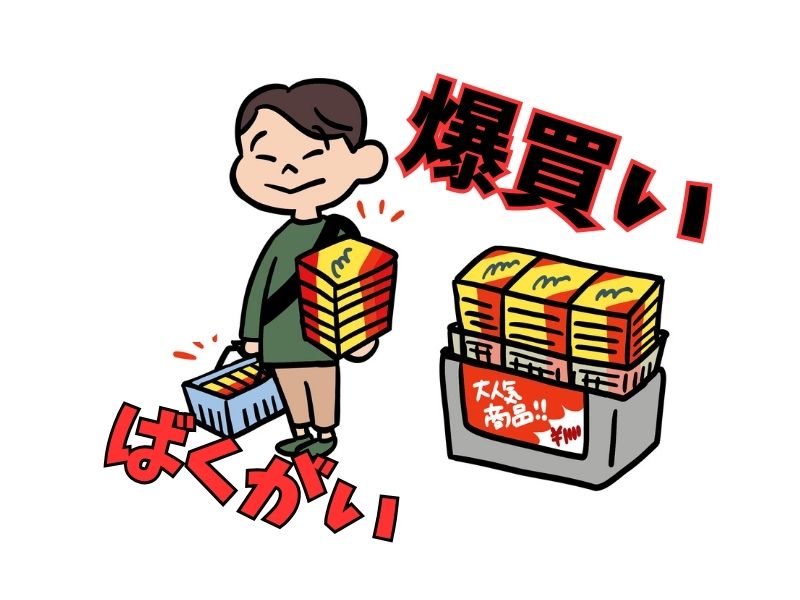
You can create countless words by putting 爆 (baku) in front of them: 爆食 (bakushoku, binge-eating), 爆睡 (bakusui, sleeping soundly), 爆速 (bakusoku, lightning fast)… Since these are nouns, adding する (suru) turns them into verbs like 爆笑する (bakushō suru, to laugh loudly) or 爆買いする (bakugai suru, to binge-shop).
I recently went on a diet and 爆やせ (bakuyase, lost a ton of weight). I successfully lost 15kg(●ˇ∀ˇ●)
Geki :激:げき
This also means “very” and has the nuance of being “extremely intense” or 激しい (hageshii). You add 激 (geki) when something’s intensity goes beyond the ordinary.
- How to use:
- 激うま (geki-uma): Very delicious.
- 激レア (geki-rea): Very rare, or 珍しい (mezurashii).
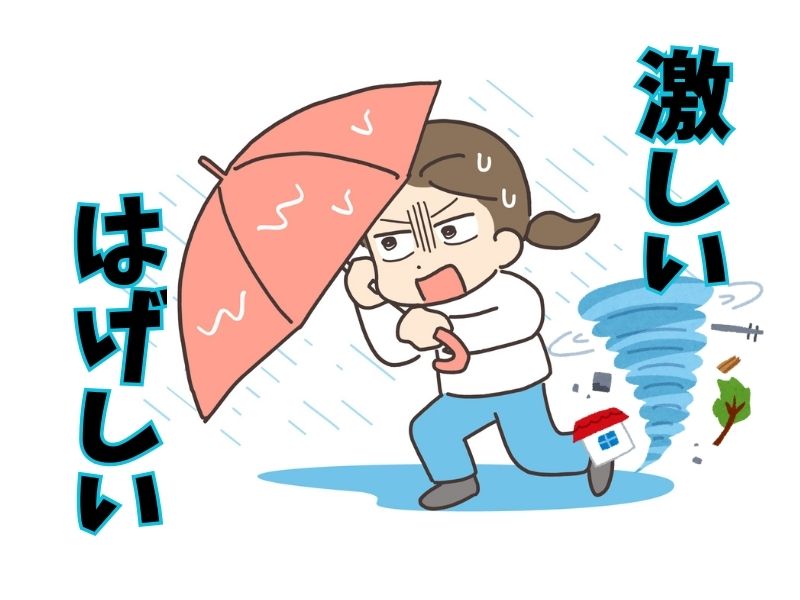
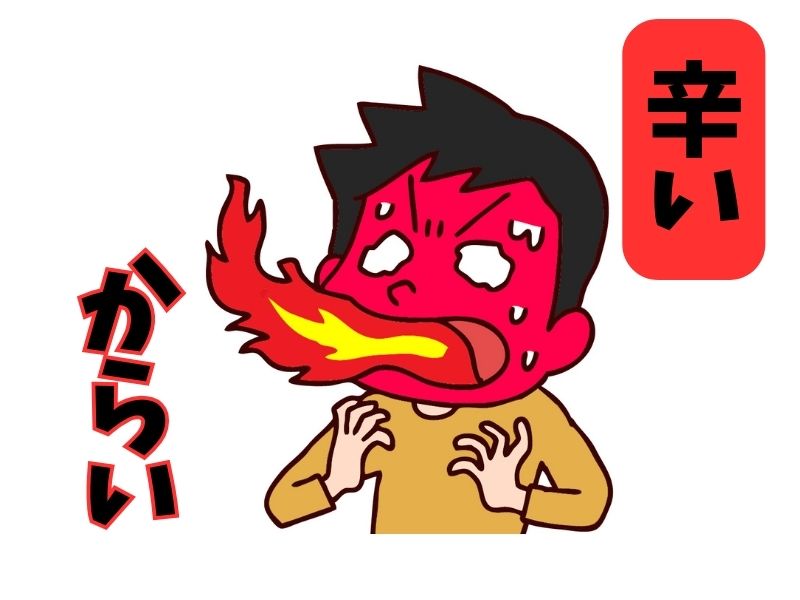
I recently had a 激レア (gekirea) part-time job. It was a very rare job that involved a few business trips to Korea per year. I passed the interview and worked there, but I quit after three weeks. Even very rare jobs have a hidden side… Be careful!
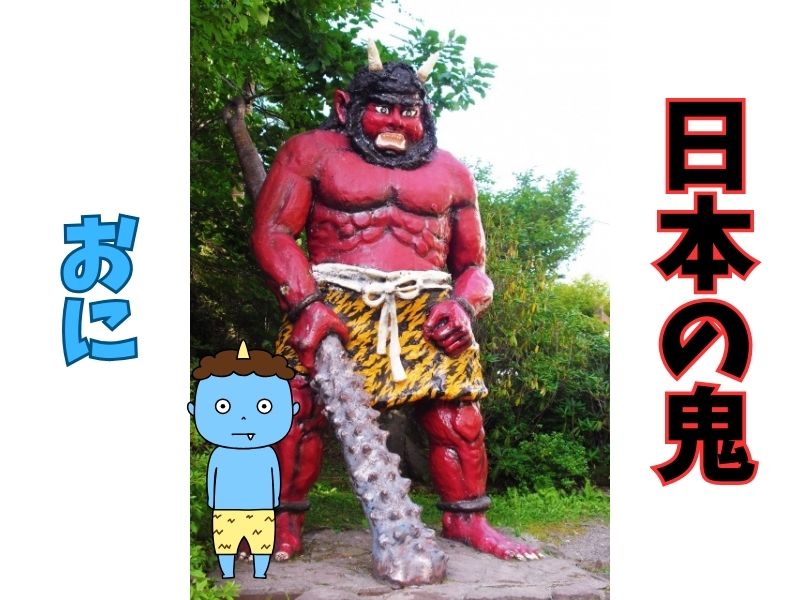
oni :鬼:おに
鬼 (Oni, demon) has a scary image, but in youth slang, it is used to mean “unbelievably” or “tremendously,” showing a surprising level of greatness.
- How to use:
- 鬼電 (oniden): To call someone a crazy amount of times. 電話 (denwa) is “phone call.”
- 鬼リピ (oniripi): To listen to or watch the same song (曲, kyoku) or video repeatedly. 何回も (nankai mo) is “many times.”
kami :神:かみ
This is the 神 (kami) from 神様 (kamisama, God), and it means “supremely wonderful” or 最高に素晴らしい (saikō ni subarashii). It’s used in the sense of “something is like a god.”
- Because you can’t see 神様 (kamisama), there’s no photo!
- How to use:
- 神対応 (kami-taiō): Service or treatment that is so good it goes beyond your imagination, or 想像 (sōzō).
- 神回 (kamikai): An unforgettable TV or gaming episode (回, kai) whose content is extremely interesting, or 面白い (omoshiroi).
- 神プレイ (kami-purei): A godlike play, an amazing feat. In Japanese, you would say 神業 (kamiwaza), but people also praise it by saying 神プレイ (kami-purei).
- I always try my best to be mindful of 神対応 (kami-taiō) at work. I strive to offer 神対応 (kami-taiō) to inbound customers by leveraging the Japanese values of being kind (親切, shinsetsu), polite (丁寧, teinei), and gentle (優しい, yasashii).
Part 2: Shortened Words (Abbreviations)
Japanese people love to shorten long words.
Āne:あ-ね
This is a shortened version of ああ、なるほどね (ā, naruhodo ne), which means “Oh, I see.” You use it to show that you’ve “understood” or 理解 (rikai) something the other person said.
- How to use:
- A: “Sorry, I can’t go with you tomorrow (明日, ashita) because I have a part-time job.”
- B: “あーね (Āne), well, maybe another time (今度, kondo).”
Sorena :それな
This means “That’s so true!” You use it to strongly agree (強く共感, tsuyoku kyōkan) with someone’s opinion, or 意見 (iken).
- How to use:
- A: “This drama is so interesting I watch it every day (毎日, mainichi).”
- B: “それな (Sorena)! Me too!”
Gachi :ガチ
This means “seriously” or “for real.” It originally came from the sumo wrestling term ガチンコ (gachinko). When you listen to high schoolers talk, you’ll hear ガチ?! マジかよ (gachi?! maji ka yo, Seriously?! For real?!) being said repeatedly. I don’t use it because I’m older, but female students also use it a lot!
A word you can use with almost the same meaning as ガチ (gachi) is マジ (maji). マジ (Maji) was originally “backstage language” (楽屋言葉, gakuya kotoba) used by entertainers during the Edo period, but it was revived as youth slang in the 1980s. It might have been the ヤンキー (yankī, delinquents) of that era who brought it back. I was a teenager around that time, and people from my generation still use it.
- How to use:
- A: “That person’s singing (歌, uta) is for real good, isn’t it?”
- B: “Yeah, they sound like a pro!”
Part 3: Words to Express Feelings
These are words used in SNS and messages to convey feelings.
Pien :ぴえん
This word represents the sound of “crying” (泣く, naku). It’s used when you’re “a little sad” (少しだけ悲しい, sukoshi dake kanashii) or “a little troubled” (ちょっと困った, chotto komatta).
- How to use:
- “My test score (点数, tensū) was bad (悪い, warui)… ぴえん (pien).”
Kusa:草
This is a word used when you’re “laughing” (笑う, warau). It came from the characters “www” looking like grass (草, kusa) growing.
- How to use:
- “My friend fell down just now, and the way they fell was so funny I grew grass (草生えた, kusa haeta).”
Emoi :エモい
This word came from the English word “emotional.” It expresses a feeling that makes your heart feel warm, or 胸が熱くなる (mune ga atsuku naru), like nostalgia, or 懐かしさ (natsukashisa), or being deeply moved.
- How to use:
- “This old photo is so エモい (emoi).”
Meroi:メロい
メロい (Meroi) was born from the word メロディー (merodī, melody) and expresses a “heart-striking melody or a bittersweet and beautiful atmosphere.” It is mainly used for music and visual works. It means “the final scene of the movie was so bittersweet and emotional that I cried.”
- How to use:
- “The chorus of this song is so メロい (meroi).”
- “I cried because the last scene of that movie was so メロい (meroi).”
Part 4: Words with Multiple Meanings
Some words are used with various meanings.
Yabai :やばい
This word originally had a bad meaning like “it’s dangerous” (危険だ, kiken da) or “this is bad” (まずい, mazui). However, now it’s also used with a good meaning, such as “amazing” or “the best” (最高, saikō).
- How to use:
- Bad meaning: “I forgot my wallet (財布, saifu)! This is bad (やばい, yabai)!”
- Good meaning: “This ramen is やばい (yabai) good!”
Numaru : 沼る
This word comes from the idea of getting stuck in a swamp, or 沼 (numa), a deep body of water. It means becoming so absorbed in something or someone that you can’t get out of it, or 抜け出せなくなる (nukedasenaku naru).
You’re probably familiar with the word はまる (hamaru, to get into), but 沼る (numaru) implies getting stuck and unable to get out. The degree of 沼る (numaru) is more intense!
- How to use:
- “I went to that idol’s concert once and 沼った (numatta, got sucked in).”
- “Once I watched that idol’s video, I was in the 沼 (numa). Before I knew it, I had joined their fan club.”
- “This game is so interesting I’m in the 沼 (numa). I can’t stop even though my test is coming up.”

Conclusion
Today, I introduced some of the latest “youth slang” from 2025. I decided to write this article because I saw on Threads that Japanese learners wanted to study words that aren’t in books but are often used in conversation.
The words I introduced today are used almost every day (毎日, mainichi) by young Japanese people. Please try to use them when you talk with your Japanese friends!
I will continue to support (応援, ōen) you in your Japanese studies!
🌸Japanese version
↓↓
日本人の友達と話そう!教科書には載っていない!ネイティブが使う「若者言葉」
🌸Recommended videos!
↓↓
“This article is “”Youth Aizuchi Language”” that young people use a lot these days!”
教科書には載っていない!ネイティブが使う「若者言葉」┃あいづち編



コメント