
Hello everyone! How’s your Japanese study going?
The Japanese you learn in textbooks and classes is very clean and proper. However, the words that native Japanese speakers use with their friends or online can be a little different from what you find in a textbook.
Today, I’ll introduce some “Aizuchi,” or conversational fillers, that are not in the textbooks but are commonly used by native speakers.
“Aizuchi” refers to the brief responses or nods you give while someone is talking, to show that you’re listening and engaged. The Japanese phrase for this is “Aizuchi o utsu,” which literally means “to strike a hammer,” but it actually means to give a response.
Lately, I’ve noticed certain “Aizuchi” being used a lot. They started as slang among young people but have now spread to middle-aged generations and are widely used today.
In this article, I’ll cover:
- The role of “Aizuchi”
- Recently used “Aizuchi”
- How to use “Aizuchi” correctly for different situations (TPO: Time, Place, Occasion)
If you use them incorrectly, it might get a little tricky…! Read to the end and become an “Aizuchi” master! (^^)!
The Role of Aizuchi(あいづち)
Japanese people often use “Aizuchi” during conversation. While some people don’t use them much, many people do. We use them frequently, especially in business conversations or when communicating with customers.
“Aizuchi” is a sign that shows:
- “I’m listening to you.”
- “I’m interested.”
- “I understand what you’re saying.”
- “I empathize with your story.”
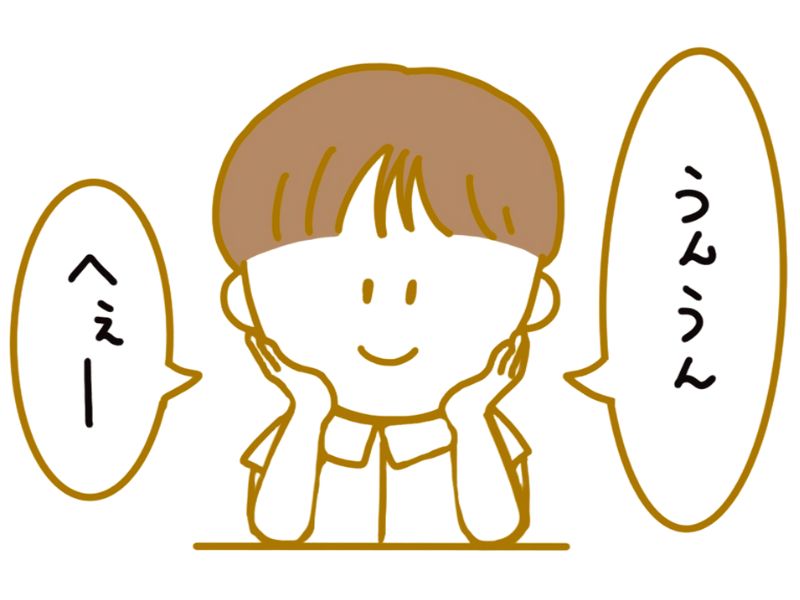
These signs make it easier for the other person to talk. In other words, sometimes “Aizuchi” comes out naturally, and other times we use it consciously for the sake of the other person.
While the culture of “Aizuchi” varies from country to country, in Japan, it plays a role in making conversations flow smoothly and become more lively.
The Recently Heard “Aizuchi”: “Tashikani” and “Naruhodo”
Lately, I often hear “Tashikani” (確かに) and “Naruhodo” (なるほど) in conversations among young people. It’s so common that it feels like they use it once or twice a minute, and when I hear it, I feel like I’m going to start using it too ( ´∀` )
Meaning and Usage of “Tashikani” (たしかに)
Meaning: It is used to agree with the other person’s opinion. It conveys the feeling of “I think that’s true” or “That’s exactly right.”
Example sentences:
- A: “Prices are going up so fast these days, aren’t they?”
- B: “Tashikani. I was surprised to see the price of vegetables at the supermarket.”
- A: “Looking at your phone too much every day makes your eyes tired, doesn’t it?”
- B: “Tashikani. My head starts to hurt when I keep looking at it.”
The expressions “Sō da ne” (そうだね) and “Hontō da ne” (本当だね) are similar to how “Tashikani” is used. Of course, you can still use the standard “Sō da ne” and “Hontō da ne.”
Meaning and Usage of “Naruhodo” (なるほど)
Meaning: It is used when you understand or are convinced by what the other person is saying. It means “I see!” or “That makes sense!”
Example sentences:
- A: “This app can reduce the capacity of your smartphone by making your photos smaller.”
- B: “Naruhodo.“
- A: “In Japan, there’s a tradition of cherry blossom viewing in the spring.”
- B: “Naruhodo. That’s why there are so many events during the cherry blossom season.”
The “Dangerous” Use of “Tashikani” and “Naruhodo”
“Tashikani” and “Naruhodo” are considered casual “Aizuchi.” While they sound natural in conversations with friends of the same generation, you should be careful in formal situations.
For example, you might think adding “desu ne” to “Naruhodo,” making it “Naruhodo desu ne,” sounds more polite. However, it doesn’t always sound very polite.
It’s a delicate matter of judgment as to where and with whom you can use them. (ˉ▽ˉ;)…
One day, someone got angry and said, “That’s rude!” when they were told “Naruhodo desu ne.”
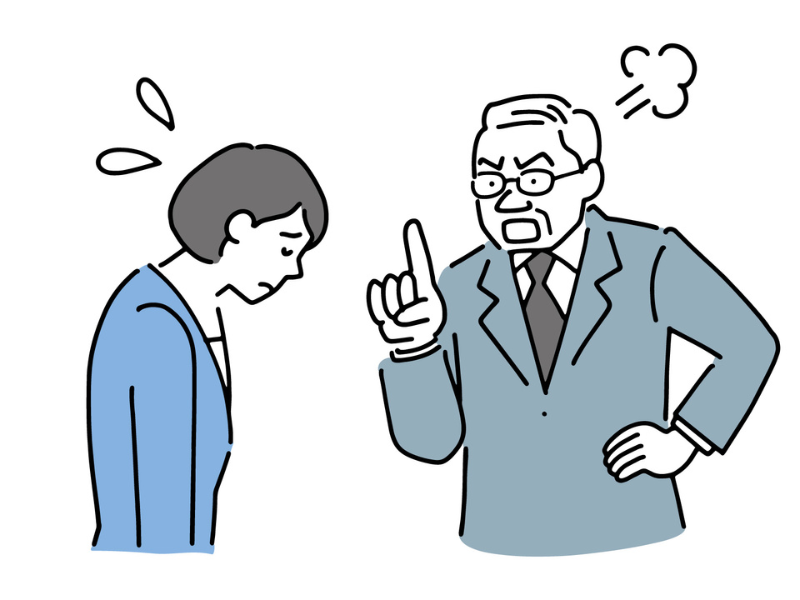
When you agree with someone in a polite way, you can say “Sō desu ne” (そうですね) or “Hontō desu ne” (本当ですね). Expressions like “Yoku nattoku dekimashita” (よく納得できました, “I am very convinced”) or “Yoku rikai dekimashita” (よく理解できました, “I have understood very well”) are not considered rude.
Summary of Aizuchi: Meaning and Formal Usage
| Meaning (Aizuchi) | Formal Expression |
| Tashikani (Agreement) | “I think so too.” “That’s exactly right.” |
| Naruhodo (Understanding) | “I see.” “I have understood it well.” |
Google スプレッドシートにエクスポート
Practice Quiz
Which “Aizuchi” is more appropriate for each conversation: “Tashikani” or “Naruhodo”?
① A: “If you don’t eat breakfast, you won’t be able to concentrate.” B: ______.
② A: “If you press this button, the lights will go out.” B: ______.
▼ Answers
① Tashikani. / Sō da ne. / Sō desu ne. ② Naruhodo. / Yoku wakatta. / Yoku wakarimashita.
Conclusion
Using “Aizuchi” can make your conversations much smoother.
If you can use the right “Aizuchi” for each situation, you will make a good impression on the other person! Use the Japanese you’ve learned and enjoy a great conversation~.
You can become an “Aizuchi” master starting today! (^^)!
🌸Japanese version
↓↓
教科書には載っていない!ネイティブが使う「若者言葉」┃あいづち編
🌸Related Articles
↓↓
일본인 친구와 대화해봐요! 교과서에는 없는 일본인이 사용하는 ‘젊은이들 말~’