Hello! This is Yuna, a Japanese language teacher.
Many of you have been reading the “O” series, and today marks the final installment. Thank you so much for reading!
It’s no exaggeration to say that “o” is the foundation of the Japanese language. I’m sure that everyone who has read this series can now use “o” with confidence.
In this fourth and final part of the series, I’ll be explaining the beautifying honorific “o.” This is the most familiar of the honorifics and is often used in daily conversation.
Let’s master the beautifying honorific “o” to further refine your Japanese skills! (^^)!
こんにちは~。毎日少しずつ日本語のまるです!
たくさんの方が『お』シリーズを読んでくださっていますが、今日はシリーズの最終回です。読んでくれた皆さん、本当にありがとうございます!
「お」は日本語の土台と言っても過言ではありません。このシリーズを読んでくれた皆さんは、確実に「お」を使いこなせるようになっているはずです。
今回のシリーズ④では、美化語に付く「お」を解説します。美化語は、敬語の中でも最も身近で、日常会話でよく使われます。
美化語の「お」をマスターして、さらに日本語に磨きをかけましょう~!(^^)!
What is the Beautifying Honorific (Bikago)?
As the kanji suggests, it’s a word that is changed to sound more beautiful.
While respectful language (sonkeigo) and humble language (kenjōgo) are used to express hierarchy and respect, beautifying language is used simply to make words sound more polite and elegant.
In short, it’s a “polite and beautiful word that can be used for anyone.” It can be used for your boss, friends, or family.
漢字の意味からもわかるように、美しく変化させ言葉です。
尊敬語や謙譲語は、相手との上下関係や敬意を表現するために使うものですが、美化語は、言葉を単に丁寧に、美しくするための言葉です。
簡単に言うと、「誰にでも使える丁寧で美しい言葉」です。目上や、友達、家族に対して使うことができます。
Who uses the Beautifying Honorific?
Beautifying honorifics are used by everyone, regardless of age or gender. It can be said that women, in particular, use it in almost all aspects of their lives. While women generally use beautifying honorifics more often, many men do not use it as much as women do.
Women: お弁当 (o-bento), お酒 (o-sake), お風呂 (o-furo), お金 (o-kane)
Men: 弁当 (bento), 酒 (sake), 風呂 (furo), 金 (kane)
When women use beautifying honorifics at the same level as a typical man, it can create a masculine or rough impression.
In any case, knowing many words that start with “o” will be useful as you’ll be able to use them correctly as respectful, humble, or beautifying honorifics.
美化語は、老若男女が使う言葉です。特に、女性は生活全般で美化語を使うと言っていいでしょう。女性は一般的に美化語を使うことが多いですが、男性は女性ほど美化語を使わない人も多いです。
女性:お弁当・お酒・お風呂・お金
男性:弁当・酒・風呂・金
女性が一般男性の水準で美化語を使うと、男性っぽい、粗い印象になる可能性があります。
どちらにしても「お」がつく言葉をたくさん知っておくと、尊敬・謙譲・美化語として使い分けができて役に立ちます。
Words that use the Beautifying Honorific “O”
As I briefly mentioned in Series 1, the beautifying honorific “o” is mainly used with nouns.
You’ll see beautifying honorifics such as お金 (o-kane), お菓子 (o-kashi), お祈り (o-inori), お酒 (o-sake), お花見 (o-hanami), お風呂 (o-furo), お弁当 (o-bento), and お寺 (o-tera) introduced in beginner-level textbooks.
Nouns with “O”
- お弁当: I’ll buy a bento. (o-bento o kau)
- お水: Please give me water. (o-mizu o kudasai)
- お砂糖: Would you like some sugar? (o-satou o iremasu ka?)
- お醤油: Do you want soy sauce? (o-shouyu, ireru?)
- お弁当:お弁当を買う。
- お 水:お水をください。
- お砂糖:お砂糖を入れますか?
- お醤油:お醤油、入れる?
| Food | o-kome (rice) / o-sashimi (sashimi) / o-shouyu (soy sauce) / o-mame (beans) / o-tofu (tofu) / o-nabe (hot pot)<br>o-miso (miso) / o-satou (sugar) / o-shio (salt) / o-su (vinegar) / o-sonaemono (offering) / o-dango (dumpling) / o-tsukemono (pickles)<br>o-niku (meat) / o-sakana (fish) / o-imo (potato) / o-yasai (vegetables) / o-sushi (sushi)<br>o-zoni (soup with rice cake) / o-mikan (mandarin orange) / o-tsuyu (soup) / o-bento (bento)<br>o-udon (udon) / o-soba (soba) / o-tsumami (snack) / o-souzai (side dish) |
| Drinks | o-nomimono (drink)/o-koucha (black tea)/o-misoshiru (miso soup)/ o-kusuri (medicine) |
| Objects | o-hashi (chopsticks) / o-chawan (rice bowl) / o-sara (plate) / o-keshouhin (cosmetics)<br>o-futon (futon/Japanese mattress) / o-miyage (souvenir) / o-kaimono (shopping) / o-tsuri (change, money) / o-saifu (wallet) |
Places | o-daidokoro (kitchen)/o-benjo (toilet)/o-heya (room)/o-ie (house)/o-furo (bath)/o-niwa (garden)/o-soto (outside)/o-sora (sky)/o-haka (grave)/ o-zashiki (Japanese-style room) |
| Body | o-naka (stomach)/o-shiri (buttocks)/o-heso (belly button)/o-hada (skin)/ o-tsuuji (bowel movement) |
| Sino-Japanese Words | o-sentaku (laundry)/o-souji (cleaning)/o-keshou (makeup)/o-shokuji (meal)/o-ryouri (cooking)/o-benkyou (study)/o-kyuuryou (salary)/ o-kondate (menu)/o-kanjou (bill)/o-shougatsu (New Year’s Day)/o-seibo (year-end gift)/o-tenki (weather)/o-soushiki (funeral)o-yuuhan (dinner)/ o-sanpo (walk)/o-miai (matchmaking meeting)/o-aite (partner)o-hiru (noon)/o-tsukai (errand) |
| Other | o-tomodachi (friend)/o-nedan (price)/o-senkou (incense stick)/ o-kagen(health/condition)/o-kaikei (bill)/o-moushikomi (application)/ o-shirase (notice)/o-mochikaeri (takeout)/o-tsukiai (dating)/o-toiawase (inquiry)/o-demukae (greeting)/o-miokuri (seeing off)/o-motenashi (hospitality)/o-kaeshi (return gift) |
| 食物 たべもの | お米(こめ)/お刺身(さしみ)/お豆(まめ)/お豆腐(とうふ)/お鍋(なべ) お味噌(みそ)/お塩(しお)/お酢(す)/お団子(だんご)/おつけもの お肉(にく)/お魚(さかな)/お芋(いも)/お野菜(やさい)/お寿司(すし) お雑煮(ぞうに)/おみかん/おつゆ/おうどん/おそば/おつまみ/お惣菜(そうざい) |
| 飲物 のみもの | お飲物(のみもの)/お紅茶(こうちゃ)/お味噌汁(みそしる)/お薬(くすり) |
| 物 もの | お箸(はし)/お茶碗(ちゃわん)/お皿(さら)/お化粧品(けしょうひん) お布団(ふとん)/お土産(みやげ)/お買物(かいもの)/おつり/お財布(さいふ) |
| 場所 ばしょ | お台所(だいどころ)/お便所(べんじょ)/お部屋(へや)/お家(いえ) お風呂(ふろ)/お庭(にわ)/お外(そと)/お空(そら)/お墓(はか) お座敷(ざしき) |
| 体 からだ | おなか/お尻(しり)/おへそ/お肌(はだ)/お通(つう)じ |
| 漢語 かんご | お洗濯(せんたく)/お掃除(そうじ)/お化粧(けしょう)/お食事(しょくじ) お料理(りょうり)/お勉強(べんきょう)/お給料(きゅうりょう) お献立(こんだて)/お勘定(かんじょう)/お正月(しょうがつ) お歳暮(せいぼ)/お天気(てんき)/お葬式(そうしき)/お夕飯(ゆうはん) お散歩(さんぽ) |
| その他 そのた | お見合(みあ)い/お相手(あいて)/お昼(ひる)/お使(つか)い お友達(ともだち)/お値段(ねだん)/お線香(せんこう)/お加減(かげん) お会計(かいけい)/お勘定(かんじょう)/お申(もう)し込(こ)み お知(し)らせ/お持(もち)ち帰(かえ)り/お付(つ)き合(あ)い お問(と)い合(あ)わせ/お出迎(でむか)え/お見送(みおく)り おもてなし/お返(かえ)し |
Adjectives with the Beautifying Honorific
Example)
O-atsui (Hot)
This is often used in summer greetings to show consideration for the other person.
Example Sentences:
“O-atsui desu ne. ” (It’s hot, isn’t it?)
“O-atsui naka, o-koshi itadaki arigatou gozaimasu.” (Thank you for coming in this heat.)
お暑い
→ 夏のあいさつなどで、相手を気づかうときによく使われます。
- 例文
「毎日お暑いですね。」
「お暑い中、お越しいただきありがとうございます。」
O-samui (Cold)
Used in winter greetings or when talking about a cold snap.
Example Sentences:
“O-samui tokoro o, waza waza o-ide itadaki arigatou gozaimasu.” (Thank you for coming all this way in the cold.)
“O-samui hi ga tsuzukimasu node, kaze o hikaremasen you ni.” (It continues to be cold, so please don’t catch a cold.)
お寒い
→ 冬のあいさつや、冷え込みを伝えるときに。
- 例文
「お寒いところを、わざわざおいでいただきありがとうございます。」
「お寒い日が続きますので、風邪をひかれませんように。」
O-takai (Expensive)
A polite, slightly indirect way to say something is expensive.
Example Sentences:
“Kono shouhin wa shoushou o-takai desu ga, sono bun hinshitsu wa tashika desu.” (This item is a little expensive, but its quality is guaranteed.)
“Koko wa sukoshi o-takai resutoran nano de, tokubetsu na hi ni pittari desu yo.” (This is a slightly expensive restaurant, so it’s perfect for a special occasion.)
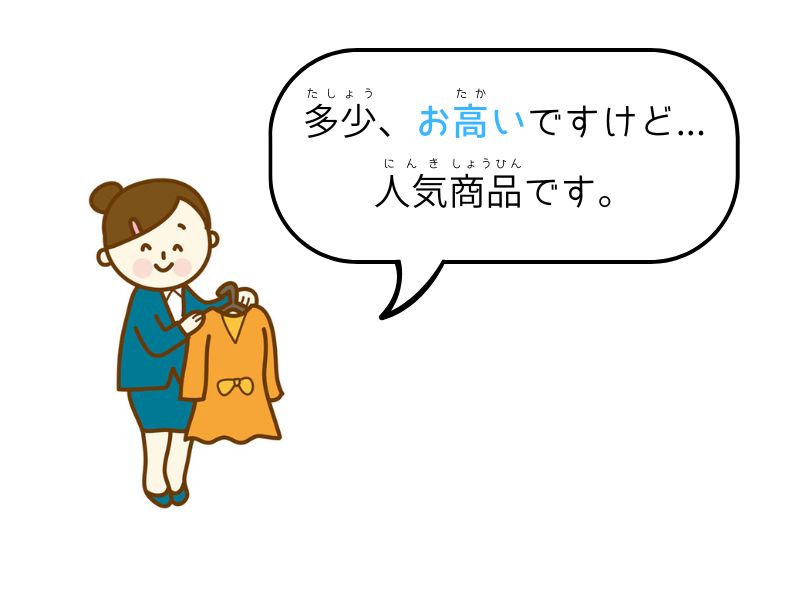
お高い
→ 値段が高いことを丁寧に、やや遠回しに言う表現。
- 例文
「この商品は少々お高いですが、その分品質は確かです。」
「ここは少しお高いレストランですが、特別な日にぴったりですよ。」
O-yasui (Cheap)
A gentle way to say something is cheap.
Example Sentences:
“Kochira wa totemo o-yasui node, kigaru ni tamesしていただけます.” (This is very inexpensive, so you can easily try it.)
“O-yasui towaie, hinshitsu niwa jishin ga arimasu.” (Even though it’s inexpensive, we are confident in its quality.)
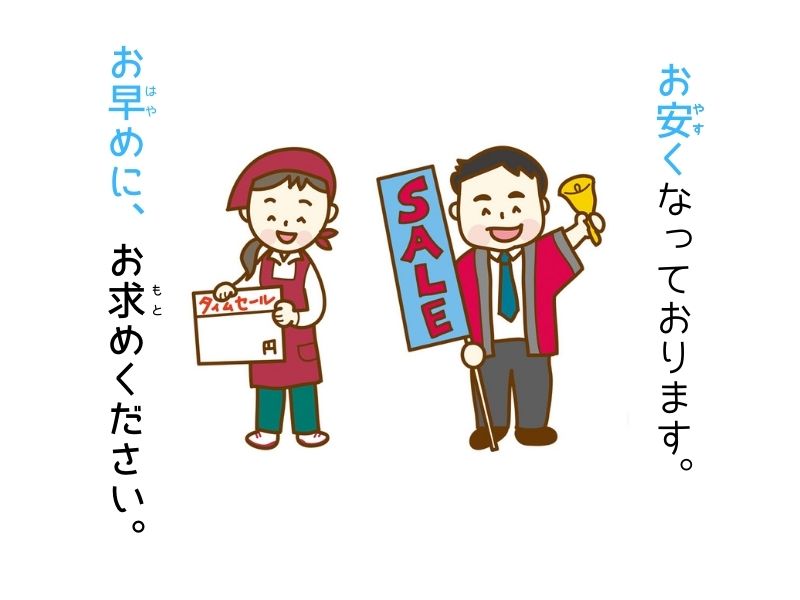
お安い
→ 値段が安いことをやわらかく伝える表現。
- 例文
「こちらはとてもお安いので、気軽に試していただけます。」
「お安いとはいえ、品質には自信があります。」
O-toku (A good deal)
A polite way to say something is a good deal, reinforcing a positive impression.
Example Sentences:
“Ima nara 2-ten setto de go-kunyuu itadaku to, totemo o-toku desu.” (If you buy a 2-item set now, it’s a very good deal.)
“Kono kaado o tsukau to pointo ga tamatte o-toku desu yo.” (If you use this card, you’ll earn points and get a good deal.)
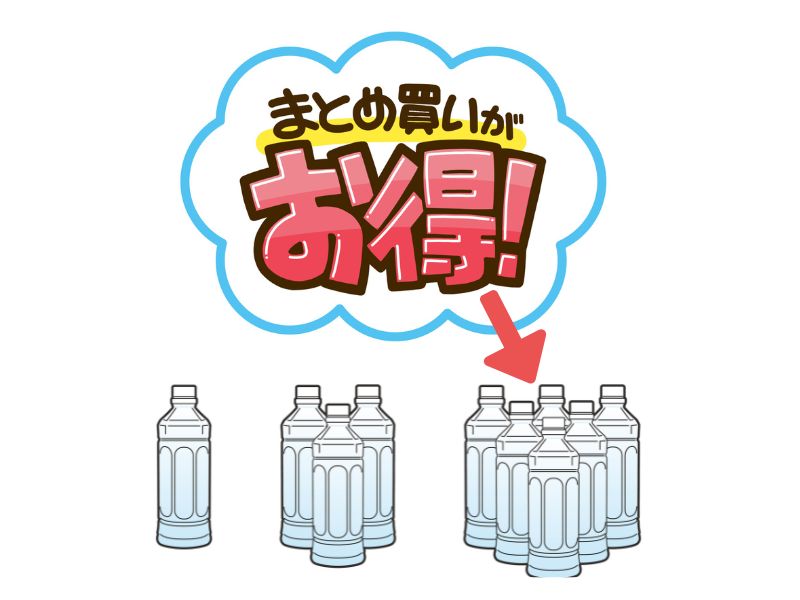
お得
→ 「得(とく)」を丁寧に言い、プラスの印象を強める表現。
- 例文
「今なら2点セットでご購入いただくと、とてもお得です。」
「このカードを使うとポイントがたまってお得ですよ。」
How to Use the Beautifying Honorific “O” Effectively
In casual conversation, the use of the beautifying honorific “o” is optional. There is no major problem whether you use it or not. However, when using formal Japanese, it is appropriate to use beautifying honorifics.
“Sensei wa, o-sake o meshiagarimasu ka.” (Is the teacher drinking alcohol?) – Correct.
“Sensei wa, sake o meshiagarimasu ka.” (Is the teacher drinking alcohol?) – Incorrect.
“Sensei, o-sake o ososugishimasu.” (Teacher, I will pour you a drink.) – Correct.
“Sensei, sake o ososugishimasu.” (Teacher, I will pour you a drink.) – Incorrect.
“Meshiagarimasu” is a respectful verb. “Ososugishimasu” is a humble verb. When using respectful or humble verbs, using beautifying honorifics together creates a good balance in the language.
カジュアルな会話では、美化語の「お」の使用は任意です。使っても、使わなくても、大きな問題にはなりません。ただ、フォーマルな日本語を使う場合は美化語を適切に使いましょう。
「先生は、お酒を召し上がりますか。」◎
「先生は、酒を召し上がりますか。 」✕
「先生、お酒をお注ぎします。 」◎
「先生、酒をお注ぎします。 」✖
「召し上がります」は尊敬語です。「お注ぎします」は謙譲語です。尊敬語、謙譲語を使った日本語には美化語を一緒に使うと、言葉のバランスが整います。
Distinguishing Between Respectful, Humble, and Beautifying Honorifics
Depending on the word, the meaning of “o” can change. It can have a respectful, humble, or beautifying meaning.
| Word | “O” Type | Example Sentence |
|---|---|---|
| o-shirase notice | Respectful | “Waza waza o-shirase itadaki, arigatou gozaimasu.” (Thank you for taking the time to give me this notice.) |
| Humble | “Watashi kara okyakusama ni o-shirase itashimasu.” (I will give the customer a notice.) | |
| Beautifying | “Kongetsu no suidou ryoukin no o-shirase.” (This month’s water bill notice.) | |
| o-motenashi hospitality | Respectful | “Kokoro no komotta o-motenashi o itadaki, makoto ni arigatou gozaimashita.” (Thank you very much for your heartfelt hospitality.) |
| Humble | “Taishita o-motenashi mo dekizu, taihen moushiwake gozaimasen.” (I am very sorry that I could not offer great hospitality.) | |
| Beautifying | “Nihonjin no o-motenashi hada.” (Japanese hospitality skin.) | |
| o-hada skin | Respectful | “Kirei na o-hada desu ne. O-urayamashii desu.” (You have beautiful skin. I’m envious.) |
| Humble/ Beautifying | “40-dai kara no o-hada kanrihou.” (Skin care methods from your 40s.) |
| 言葉 | 「お」の種類 | 例文 |
|---|---|---|
| お知らせ | 尊敬 | わざわざお知らせ頂き、ありがとうございます。 |
| 謙譲 | 私からお客様にお知らせいたします。 | |
| 美化語 | 今月の水道料金のお知らせ | |
| おもてなし | 尊敬 | 心のこもったおもてなしを頂き、誠にありがとうございました |
| 謙譲 | 大したおもてなしもできず大変申し訳ございません | |
| 美化語 | 日本人のおもてなし | |
| 肌 | 尊敬 | きれいなお肌ですね。おうらましいです。 |
| 美化 | 40代からのお肌管理法 |
Words where “O” has Lost its Beautifying Meaning
There are many words where the “o” that was attached to beautify the word has become part of the word itself. Therefore, it is used as a single word, not as a beautifying honorific.
If you remove the “o,” the meaning may be lost or changed. For example, if you say “kazu” instead of “okazu” (side dish), it doesn’t make sense. If you say “nigiri” instead of “onigiri” (rice ball), it means sushi.

Onigiri/おにぎり

Nigiriにぎり
「お」を付けて、言葉を美化する役割であったものが、だんだん1つの言葉として認識されるようになった言葉もたくさんあります。なので、美化語として使うのではなく、一つの言葉としての感覚で使っています。
「お」を取ってしまうと意味が通じなかったり、別の意味の言葉になります。例えば、「おかず」は、「かず」といっても通じません。「おにぎり」を「にぎり」というと、お寿司の意味になります。
Summary
Over four installments, I have explained the role of the Japanese prefix “o.”
- Series 1: We understood the basic role of “o.” We learned that “o” tends to be used with native Japanese words (wago) and “go” with Sino-Japanese words (kango), and that they are often attached to nouns and adjectives.
- Series 2: We learned about the “o” attached to respectful language. We understood its role in elevating the actions and possessions of the person you are speaking to.
- Series 3: We learned about the “o” attached to humble language. We understood its role in showing respect to the other person by humbling our own actions.
- Series 4 (This one): We learned about the “o” attached to beautifying honorifics. We understood that it is a polite expression that can be used for anyone by simply making the word beautiful and elegant.
How was it?
“O” plays a very important role in expressing politeness and beauty in Japanese. I sincerely hope that everyone who has read this series will be able to use this knowledge to speak Japanese with more confidence.
Let’s continue to work hard on our Japanese studies together!
🌸【Basic Keigo】Japanese Words With and Without “O” | Series ①
🌸【N3〜Business Japanese】”O” Series ② A complete guide to what “O” means and how to use it| Honorific Language Edition┃Japanese-English translation
🌸【N3〜Business Japanese】”O” Series ③ A Complete Guide to the Meaning and Usage of “O” in Kenjougo (Humble Language)


コメント