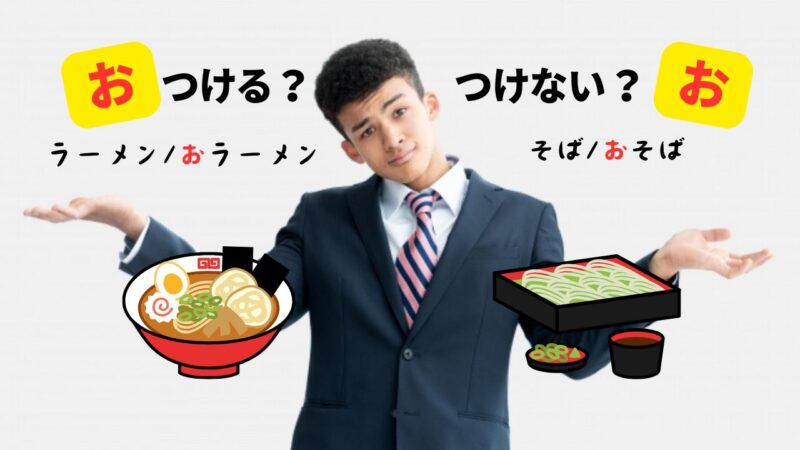
Have you ever felt confused about how to use the prefix “o,” which appears so often in Japanese? “O” is used not only in conversation but also in written language like messages and emails.
“O” is used in many different situations, but some words take “o” and others don’t.
For example, we say “osoba” (おそば) for the Japanese food soba, but we don’t say “o-ramen.” I think it’s really difficult to know which words to use “o” with and when to use it. Whether or not to add “o” is largely influenced by whether a word is a Wago (和語わご), a word that has existed in Japan since ancient times; a Kango (漢語かんご), a word introduced from China; or a Gairaigo (外来語がいらいご), a word that came from overseas.
“O” is the foundation of polite language (keigo), so it’s important to study it carefully.
In this article, I will explain in an easy-to-understand way which words use “o,” which don’t, and how to use it. I hope it helps you improve your Japanese skills!
【敬語の基礎】日本語「お」がつく言葉と、つかない言葉┃シリーズ①
日本語で、よく使う「お」の使い方に迷ったことはありませんか。「お」は、会話はもちろん、メッセージやメールなどの書き言葉でも使います。
「お」は、いろいろな場面で使われますが、「お」がつく言葉もあれば、つかない言葉もあります。
日本食の「そば」を「おそば」といいますが、「ラーメン」は「おラーメン」といいません。どんな言葉に「お」をつけるのか、いつ「お」を使うのかが、本当に難しいと思います。
「お」をつける、つけないは、日本古来の言葉である『和語』なのか、中国から伝わった『漢語』なのか、そして海外から来た『外来語』なのかが大きく関係しています。
「お」は、敬語の基礎になるのでしっかり勉強したいですね。
今回は「お」がつく言葉とつかない言葉、「お」の使い方に絞って、わかりやすくご紹介します。日本語のスキルUP、ブレシュUPにお役立てください~。
Words with “o”
There are many words that use “o.” For example, o-kane (お金), o-saifu (お財布), o-satou (お砂糖), o-mise (お店), o-kimochi (お気持ち), o-isogashii (お忙しい), o-hima (お暇), etc. You probably use many of them as well.
「お」がつく言葉
「お」がつく言葉は、たくさんあります。「お金」「お財布」「お砂糖」「お店」「お気持ち」「お忙しい」「お暇」などなど…限りなくたくさんあります。みなさんも、よく使っていると思います。
Here are some words with “o” categorized by part of speech (品詞ひんし):
| Part of Speech (品詞) | Words with “o” |
|---|---|
| Noun | o-namae (お名前), o-kuni (お国), o-sake (お酒), o-shio (お塩), o-shouyu (お醤油), o-miso (お味噌), o-tegami (お手紙), etc. |
| I-adjective | o-hayai (お早い), o-isogashii (お忙しい), o-wakai (お若い), o-yasashii (お優しい), o-utsukushii (お美しい), o-yasui (お安い), etc. |
| Na-adjective | o-genki (お元気), o-suki (お好き), o-kirai (お嫌い), o-tokui (お得意), o-jouzu (お上手), o-hima (お暇), o-kirei (お綺麗), etc. |
| Noun-like verb | o-shiriai (お知り合い), o-shiharai (お支払い), o-toiawase (お問い合わせ), o-yorokobi (お喜び), etc. |
Words with “o” categorized by Wago and Kango
This is a list of words with “o” categorized by Kanji type.
| 漢字別 | 「お」がつく言葉 |
|---|---|
| Kanji TypeWords with “o”Wago (和語) (Japanese reading) | o-namae (お名前), o-kuni (お国), o-sake (お酒), o-shio (お塩), o-hayai (お早い), o-isogashii (お忙しい), o-suki (お好き), o-shiriai (お知り合い), etc |
| Kango (漢語) (Chinese reading) | o-saifu (お財布), o-shouyu (お醤油), o-miso (お味噌), o-tofu (お豆腐), o-denwa (お電話), o-shokuji (お食事), o-bentou (お弁当), o-sushi (お寿司), etc. |
The basic rule is to add “o” to Japanese-origin words (Wago) and “go” to Chinese-origin words (Kango). However, there are exceptions where “o” is added to Kango words.
日本古来の言葉『和語』には「お」をつけて、中国から伝わった『漢語』には「ご」をつけつのが基本ですが、漢語にも「お」がつく例外があります。
Words without “o”
There are many words that don’t take “o.” For example, denki (電気), chikatetsu (地下鉄), enpitsu (鉛筆), hon (本), keshigomu (消しゴム), ko-hi (コーヒー), banana, tanoshii (楽しい), benri (便利), yumei (有名), and many more.
We say “o-denwa” (お電話) but we don’t say “o-denki” (お電気). Both words start with “den” (電), but “o” is not added to “denki.” By the way, “go” is not added either.
We also don’t say “o-enpitsu” (お鉛筆), “o-ko-hi” (おコーヒー), “o-tanoshii” (お楽しい), or “o-benri” (お便利). These are words that don’t take “o.”
「お」をつけない言葉
「お」がつかない言葉も、たくさんあります。「電気」「地下鉄」「鉛筆」「本」「けしゴム」「コーヒー」「バナナ」「楽しい」「便利」「有名」など、限りなくたくさんあります。
「電話」には「お」がついて「お電話」といいますが、「電気」は「お電気」といいません。同じ「電」から始まる言葉ですが、電気には、「お」がつきません。ちなみに、「ご」もつきません。
この他にも、「お鉛筆」や「おコーヒー」「お楽しい」「お便利」とはいいません。
Which words take “o”?
“O” is attached to Wago (和語わご). Wago are words that have existed in Japanese since ancient times.
どんな言葉に「お」がつく?
「お」は和語(わご)につきます。和語は昔からあった「日本語の言葉」のことです。和語のなかでも、以下3つの条件に当てはまるものに「お」がつきます。
1. common language in someone’s life
Among Wago, “o” is often attached to words that are used frequently in daily life.
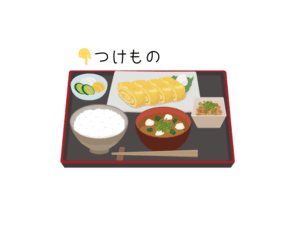
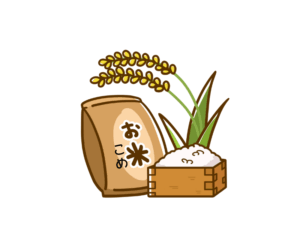
For example, words like kome (米) and tsukemono (つけもの) are used every day, so they often take “o.” So, they become o-kome (お米) and o-tsukemono (おつけもの). “O” is attached to words that have existed for a long time and are used frequently in daily life.
Other examples include ohashi (お箸), osara (お皿), omizu (お水), oyu (お湯), ocha (お茶), ofuton (お布団), onabe (おなべ), osatou (お砂糖).
生活の中で、よく使う言葉
和語の中でも、生活の中でよく使う言葉は「お」がつくことが多いです。
例えば、「米」や「つけもの」といった言葉です。毎日食べるものですから、よく使う言葉です。それで、「お米」「おつけもの」になります。昔から生活でよく使う言葉に「お」がつきます。
この他にも、お箸、お皿、お水、お湯、お茶、お布団、おなべ、お砂糖などが、あります。
2.Words that are familiar with “o”
“O” is also attached to words that feel natural or harmonious with it. So, words like kome (米), tsukemono (つけもの), and shio (塩) are words that are familiar and go well with “o.” Even if a word is used frequently in daily life, “o” is not attached if it doesn’t go well with it.
There isn’t a clear rule for what “matches” with “o,” but just like in colors or interior design, some things simply don’t fit together, right? Elegant curtains and elegant furniture Blinds and elegant furniture.
「お」と、よくなじむ言葉
「お」となじむ言葉につきます。「米」「つけもの」「塩」などは、「お」となじむ言葉だといえます。生活の中でよく使う言葉でも、「お」と合わない、なじまない言葉には「お」がつきますん。
なじまない基準は私もわかりませんが、色やインテリア、ファッションでも、なじまないものがありますよね。


3. Words with “o” that are Kango
“O” can also be attached to Kango (漢語かんご). Kango are words that came from China. Words with on-yomi (音読おんどく) are Kango. Kango words usually take “go,” but some words that use Chinese characters for ancient Japanese words take “o.”
漢語につく「お」の言葉
「お」は、漢語につくときがあります。漢語は、中国から入ってきた言葉です。音読みをする言葉が漢語です。漢語には、基本的に「ご」がつきますが、昔からある和語に中国の漢字を当てた言葉には、「お」がつくものがあります。

For example, shouyu (醤油), miso (味噌), toufu (豆腐), sushi (寿司), and bentou (弁当) are Kango words, but they take “o,” becoming o-shouyu (お醤油), o-miso (お味噌), o-toufu (お豆腐), o-sushi (お寿司), and o-bentou (お弁当).
例えば、醤油、味噌、豆腐、寿司、弁当などは、漢語ですが「お」がついて、「お醤油」「お味噌」「お豆腐」「お寿司」「お弁当」になります。
Summary of words with “o”
| 1. Words used frequently in daily life | ohashi (お箸), osara (お皿), omizu (お水), oyu (お湯), ocha (お茶), ofuton (お布団), onabe (おなべ), osatou (お砂糖)… |
| Words that are familiar with “o” | ohashi (お箸), osara (お皿), omizu (お水), oyu (お湯), ocha (お茶), ofuton (お布団), onabe (おなべ), osatou (お砂糖)… |
| Kango words with “o” | o-shouyu (お醤油), o-miso (お味噌), o-toufu (お豆腐), o-sushi (お寿司), o-bentou (お弁当), o-henji (お返事), o-denwa (お電話)… |
Which words don’t take “o”?
Here are three types of words that don’t take “o.”
1.Wago that don’t go well with “o”
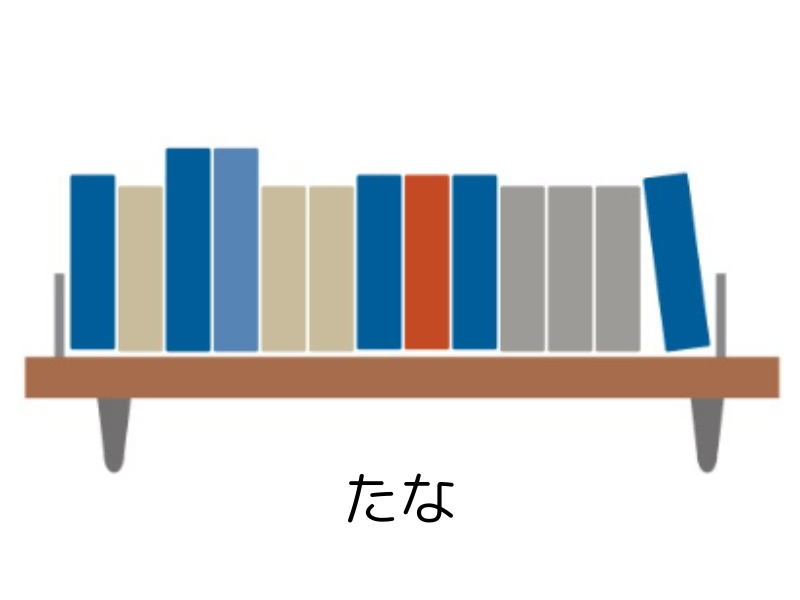
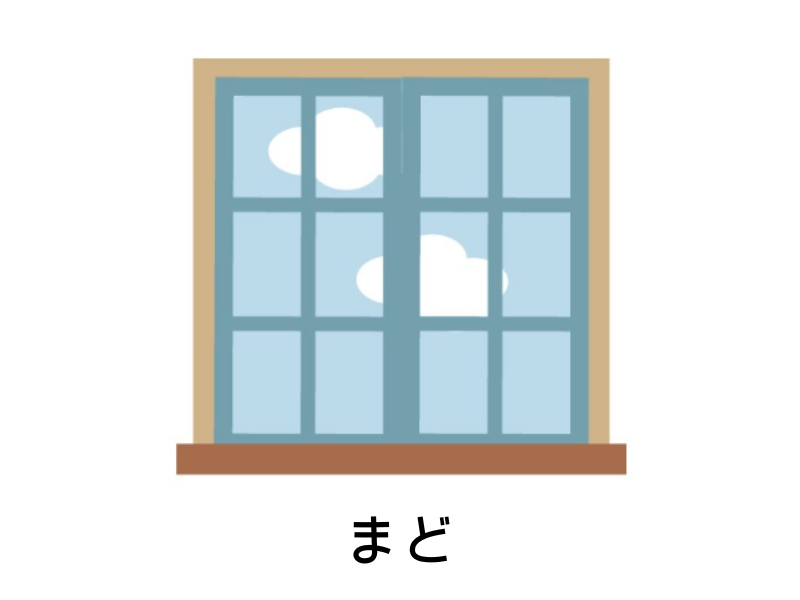
“O” is not attached to Wago that don’t go well with it. For example, mado (窓) and tana (棚). We don’t say “o-mado” or “o-tana.”
「お」となじまない和語
「お」となじまない和語には、つきません。たえば、窓(まど)や棚(たな)などです。「おまど」「おたな」にはなりませんね。
2. Kango
Kango are words that came from China. “O” is not attached to these Kango words.
There are exceptions, but “o” is basically not attached to Kango.
Basically, you attach “go” to Kango words. For example, you say go-renraku (ご連絡), go-annai (ご案内), go-setsumei (ご説明), go-shukuhaku (ご宿泊). You have probably heard these before.
漢語
漢語は、「中国から入ってきた言葉」のことです。「お」は、この漢語には、つきません。
例外もありますが、基本的に漢語に「お」はつきません。
漢語には、基本的に「ご」をつけます。例えば、「ご連絡」「ご案内」「ご説明」「ご宿泊」などがあります。みなさんも、聞いたことがあると思います。
3. Gairaigo (Foreign words)
Gairaigo are words that come from languages other than Japanese and are written in katakana. “O” is not attached to Gairaigo. We don’t say “o-ko-hi,” “o-sain,” or “o-kafe.”
Some people try to be polite by saying to a customer, “O-sain (おサイン) please” or “I will send you o-fairu (おファイル),” but these are incorrect! (^^)!
There is an exception: toire (トイレ). It’s okay to say “o-toire” (おトイレ). (^^)!
カタカナ(外来語/がいらいご)
外来語は、日本語以外の言語で、カタカナで書く言葉です。「お」は、外来語につきません。
「おコーヒー」や「おサイン」「おカフェ」とはいいません。
丁寧に言おうとして、お客様に「こちらに、おサインをお願いします❌」と言った人や、「今からおファイルをお送りします❌」と言った人もいましたが、これはNGです!(^^)!
例外に「トイレ」があります。「おトイレ🙆🏻」は、使っても大丈夫です。!(^^)!
Quiz time!
📝 Do the following words take “o” or not? Answer with a circle or an “X.”
1. mizu (水) o kudasai. (Please give me water.)
2. Yukkuri ( ) unten (運転) shite kudasai. (Please drive slowly.)
3. Kochira ni ( ) namae (名前) o kaite kudasai. (Please write your name here.)
4. Watashi wa maiasa ( ) tamago (玉子) o tabemasu. (I eat an egg every morning.)
5. Suteki na ( ) nekutai (ネクタイ) desu ne. (That’s a nice tie.)
Answer: 1. ○ 2. × 3. ○ 4. × 5. × → Mizu (水) and namae (名前) are Wago, so they take “o.” → Unten (運転) and tamago (玉子) are Kango, so they don’t take “o.” “Go” is not attached either. → Nekutai (ネクタイ) is a Gairaigo (foreign word), so it doesn’t take “o.”
クイズにチャレンジ!
📝次の( )の中に「お」がつきますか?つきませんか?〇✕で答えてください。
- ( )水をください。
- ゆっくり( )運転してください。
- こちらに( )名前をかいてください。
- 私は毎朝( )玉子を食べます。
- すてきな( )ネクタイですね。
こたえ:1. 〇 2. × 3. 〇 4. × 5. ×
→ 「水」「名前」は和語なので「お」です。
「運転」「玉子」は漢語なので「お」はつきません。ちなみに「ご」もつきません。
「ネクタイ」はカタカナ(外来語)なので、「お」がつきません。
The meaning of “o”
There are three reasons to add “o.”
- To make a word honorific (sonkeigo, 尊敬語そんけいご)
- Example: Nihon no o-sushi wa o-suki desu ka? (Do you like sushi in Japan?) (o-sushi: bikago, 美化語; o-suki: sonkeigo, 尊敬語)
- Example: O-isogashii tokoro, sumimasen. (I’m sorry to bother you when you are busy.) (o-isogashii: sonkeigo, 尊敬語)
- To make a word humble (kenjougo, 謙譲語けんじょうご)
- Example: Ashita, o-denwa itashimasu. (I will call you tomorrow.) (o-denwa: kenjougo, 謙譲語)
- To make a word more beautiful (bikago, 美化語びかご)
- Example: Atarashii o-saifu ga hoshii. (I want a new wallet.) (o-saifu: bikago, 美化語)
We use honorific language for customers and superiors. We use humble language for ourselves. We use bikago to make our words sound more beautiful.
Adding “o” makes a word polite and not rude. That’s why we use “o” in many situations.
「お」の意味
「お」をつける理由は、3つあります。
1. 尊敬語(そんけいご)にするため
例) 日本のお寿司は、お好きですか。(お寿司:美化語/お好き:尊敬語)
例) お忙しいところ、すみません。(お忙しい:尊敬語)
2. 謙譲語(けんじょうご)にするため
例)明日、お電話いたします。(お電話:謙譲語)
3. 美化語(びかご)にするため
例)新しいお財布がほしい。(お財布:美化語)
尊敬語は、お客様や目上の人に関することに使います。謙譲語は、自分に関することに使います。美化語は言葉をきれいにします。
「お」をつけることで、失礼のない丁寧な敬語になります。それで、いろんな場面で「お」を使います。
Summary
Today, we learned about Japanese words with and without “o.” I wrote this article because I thought Japanese learners might be confused about the presence or absence of “o.”
By listening to plenty of Japanese, you’ll gradually start to use “o” correctly and naturally. There’s no need to force yourself to memorize every case. If this lesson helps you solve your questions about “o,” that’s all that matters!
まとめ
今日は日本語の「お」がつく言葉、つかない言葉の紹介をしました。日本語学習者が勉強していて「お」の有無に疑問を持ちそうだったので、記事にしました。
「お」は、日本語をたくさん聞いていると、少しずつ自然とみについていきます。「覚えなくちゃ」と思う必要はありません。今日の話しで皆さんの「お」の疑問が解ければそれでいいです!
みなさんの日本語のSkillupにつなげてください!(^^)!
🌸Next skill up is here ⇊
Series ② (Honorific Language Edition) 【N3~Business Japanese】 The Complete Guide to Words With and Without “o”
「お」シリーズ ②尊敬語編┃
🌸This is also recommended!⇊
“What words take ‘go’? A deep-dive into the difference between Wago and Kango”
「『ご』はどんな言葉につく?和語・漢語の違いを深掘り解説」




コメント